
Last updated: September 29, 2026
Quick answer: The top localities to buy property in Delhi in 2026 depend on budget, property type, commute, rental demand, redevelopment potential and legal status. Current listing-data snapshots show meaningful differences between Delhi micro-markets: Housing.com currently reports average listed prices of about ₹17,018/sq ft in South Delhi, ₹15,108/sq ft in Dwarka, ₹11,016/sq ft in Rohini, ₹21,117/sq ft in Vasant Kunj, ₹18,554/sq ft in Pitampura and ₹20,731/sq ft in Punjabi Bagh. These are portal asking/listing indicators, not registered transaction prices, so buyers should use them as a comparison starting point rather than a final valuation. Housing.com South Delhi, Housing.com Dwarka, Housing.com Rohini.
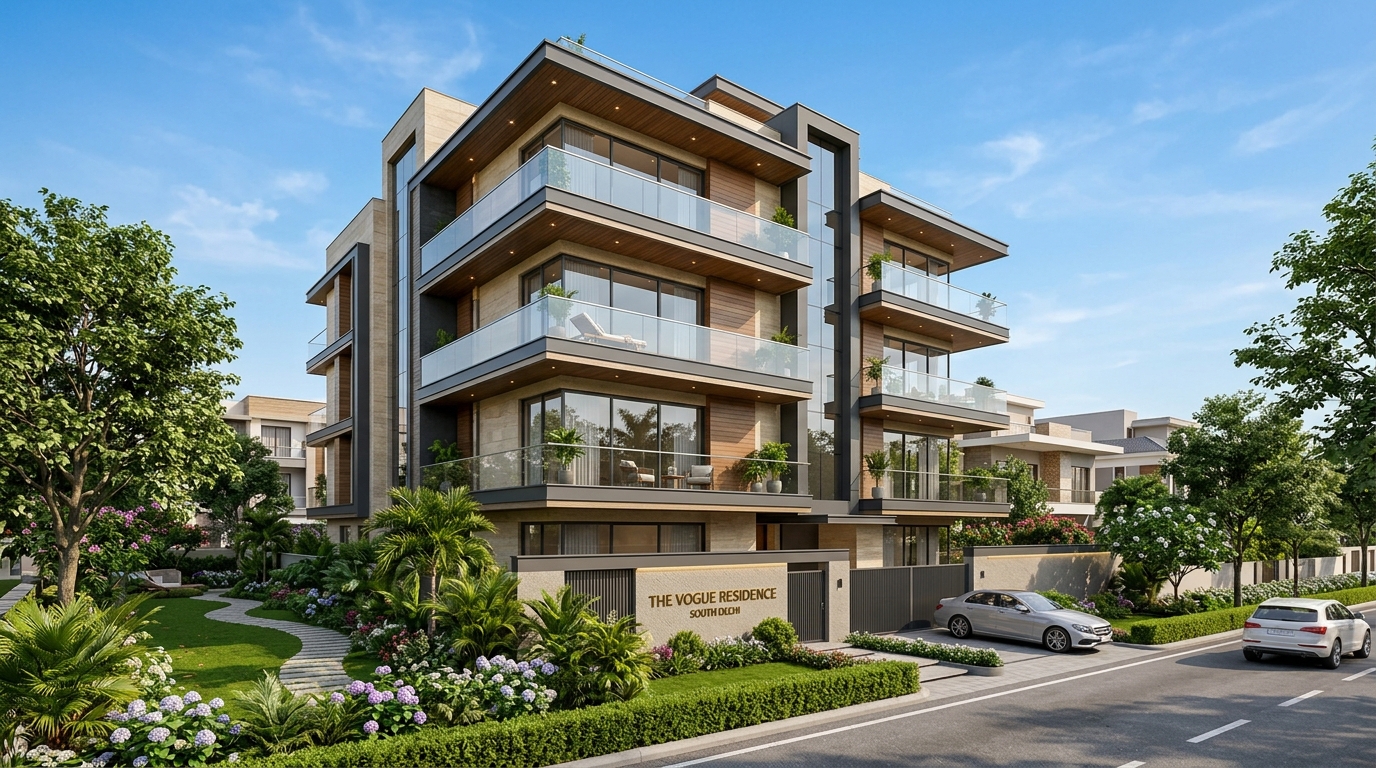
How Should You Choose Among the Top Localities to Buy Property in Delhi?
Start with the use case, not the locality name. A premium South Delhi builder floor, a Dwarka group-housing apartment and a Rohini resale flat solve different buyer problems. The right comparison should include total acquisition cost, commute time, rental demand, property condition, title and approvals, liquidity and the amount of future infrastructure already operational rather than relying only on a headline appreciation percentage.
For legal due diligence, use Credestate’s Delhi property buying checklist, and for valuation context see the Delhi property rates guide and Delhi circle-rate guide.
Top Localities to Buy Property in Delhi 2026: What Buyers Should Compare
Instead of presenting one universal ranking, the table below groups established Delhi markets by the buyer profile they commonly serve. The price figures are current portal-listed averages where available and should be treated as indicative market data.
| Locality | 2026 listed-price indicator | Typical property profile | Common buyer use case | What to verify |
|---|---|---|---|---|
| South Delhi | ~₹17,018/sq ft average across South Delhi on Housing.com | Builder floors, apartments, independent homes | Premium end-use, established social infrastructure | Title chain, floor sanction, parking, land share |
| Vasant Kunj | ~₹21,117/sq ft | Apartments, independent homes, villas | Airport-side living and established residential demand | Society records, maintenance, title and conversion status |
| Dwarka | ~₹15,108/sq ft | CGHS/DDA apartments and newer residential stock | Planned-sector living, airport/Gurugram connectivity | Society dues, lease/freehold status, exact sector connectivity |
| Rohini | ~₹11,016/sq ft | DDA flats, apartments, builder floors | Mid-segment end-use and selected growth pockets | Plot/title structure, sanctioned plans, road width, actual metro access |
| Janakpuri | ~₹23,486/sq ft on current Housing.com locality data | Builder floors, apartments, older established housing | West Delhi end-users seeking mature amenities | Property-specific data because listing samples vary sharply |
| Punjabi Bagh | ~₹20,731/sq ft | Builder floors, bungalows, apartments | Established West Delhi residential demand | Plot ownership, redevelopment terms, floor rights |
| Pitampura | ~₹18,554/sq ft | Builder floors and apartments | North-West Delhi end-use and established connectivity | Building approvals, parking, road access and actual transaction comparables |
| Mayur Vihar Phase 1 | ~₹12,828/sq ft | Apartments and group housing | East Delhi and Central Delhi commuters | Society age, maintenance, metro access and title documents |
Data note: Housing.com is a live property-listing data source. Its locality pages show asking/listed-price indicators that can include wide ranges depending on property type and micro-location. Do not treat portal averages as guaranteed transaction prices. Compare at least several genuinely comparable properties before negotiating.
Top Localities to Buy Property in Delhi 2026: South Delhi
South Delhi covers highly differentiated micro-markets, so treating the entire zone as one price band can be misleading. Housing.com currently reports a South Delhi average of about ₹17,018/sq ft, while individual localities can sit far above or below that figure. For example, the same portal currently shows Alaknanda at about ₹21,344/sq ft, Saket around ₹14,854/sq ft, and Greater Kailash I and II at roughly ₹25,577 and ₹24,139/sq ft respectively in its current listing data.
Who Typically Considers South Delhi?
- Buyers prioritising established neighbourhood infrastructure and social amenities.
- Families looking for larger builder floors or independent-home formats.
- Buyers for whom land component and long-term end-use value matter more than lowest entry price.
What Should You Check in a South Delhi Builder Floor?
Check the registered title chain, the relationship between the building plan and the constructed floors, sanctioned parking arrangement, ownership of the underlying land, common-area rights and any builder-floor specific agreements. A premium address does not remove the need for property-level legal and technical diligence.
Top Localities to Buy Property in Delhi 2026: Vasant Kunj
Housing.com’s current 2026 locality page reports an average listed price of about ₹21,117/sq ft for Vasant Kunj and a 10.41% year-on-year change on its page. Individual sectors also vary materially; the current page lists Sector D at about ₹22,107/sq ft and Sector C at about ₹24,035/sq ft.
For buyers, the important distinction is between broad locality data and the specific apartment or house being offered. Society age, maintenance, floor, view, renovation level, parking, land share and exact block can create major price differences.
Top Localities to Buy Property in Delhi 2026: Dwarka
Dwarka is one of the clearest apartment-led micro-markets in Delhi. Housing.com currently reports an average listed price of about ₹15,108/sq ft. Its current locality table shows examples such as Sector 6 at roughly ₹16,179/sq ft, Sector 10 at ₹16,117/sq ft, Sector 22 at ₹16,500/sq ft and Sector 19 at ₹17,380/sq ft.
Why Dwarka Remains Important in a 2026 Buyer Search
Dwarka has direct Airport Express connectivity from Dwarka Sector 21 to Yashobhoomi Dwarka Sector 25, and Delhi Metro’s current network also includes multiple operational Dwarka stations and corridors. DMRC’s network information confirms the Airport Express extension to Yashobhoomi and the operational Phase-IV extensions now serving additional parts of Delhi.
When comparing Dwarka properties, focus on sector, society, age of construction, maintenance cost, parking and the actual walking/drive time to the station rather than treating “Dwarka” as one homogeneous market.
Top Localities to Buy Property in Delhi 2026: Rohini
Rohini is particularly useful for a comparison-based article because its sectors behave very differently. Housing.com currently reports an average listed price of about ₹11,016/sq ft and shows Sector 9 around ₹17,937/sq ft, Sector 14 around ₹20,528/sq ft, Sector 13 around ₹16,356/sq ft and Sector 24 around ₹8,032/sq ft.
That spread is precisely why buyers should not use a “Rohini average” to negotiate a particular property. Compare the same property type, size, floor, construction age, parking and sector before drawing a conclusion about value.
Janakpuri: Established West Delhi Demand, but Price Data Needs Care
Housing.com’s current Janakpuri page reports about ₹23,486/sq ft on its locality snapshot, but the same page shows a comparatively small property sample and very wide price ranges.
For an SEO guide, that distinction matters: a locality with a high portal average is not automatically a higher-return investment. Use Janakpuri’s established amenities and transport access as qualitative factors, then validate the specific property through comparable listings and recent transaction evidence.
Punjabi Bagh and Pitampura: Mature North-West and West Delhi Options
Punjabi Bagh and Pitampura can appeal to buyers who want established neighbourhood infrastructure without moving into the highest-priced South Delhi micro-markets. Housing.com currently reports about ₹20,731/sq ft for Punjabi Bagh and about ₹18,554/sq ft for Pitampura, while its current Pitampura page shows a negative year-on-year movement.
These figures demonstrate why a locality “ROI” label can be misleading. One portal can show different year-on-year movement from another depending on the mix of properties listed. Buyers should compare supply, property type and asking-price dispersion before assuming that a locality is accelerating or slowing.
Mayur Vihar Phase 1: East Delhi Entry Point With Recent Price Movement
Housing.com’s current Mayur Vihar Phase 1 page reports about ₹12,828/sq ft and an 18.76% year-on-year rise on its locality page. The sample includes significant variation by pocket.
For buyers commuting toward Central Delhi, Noida or East Delhi employment centres, Mayur Vihar can be evaluated on a different basis from premium South Delhi. Compare commute, society maintenance, age of construction and property size before comparing headline price growth.
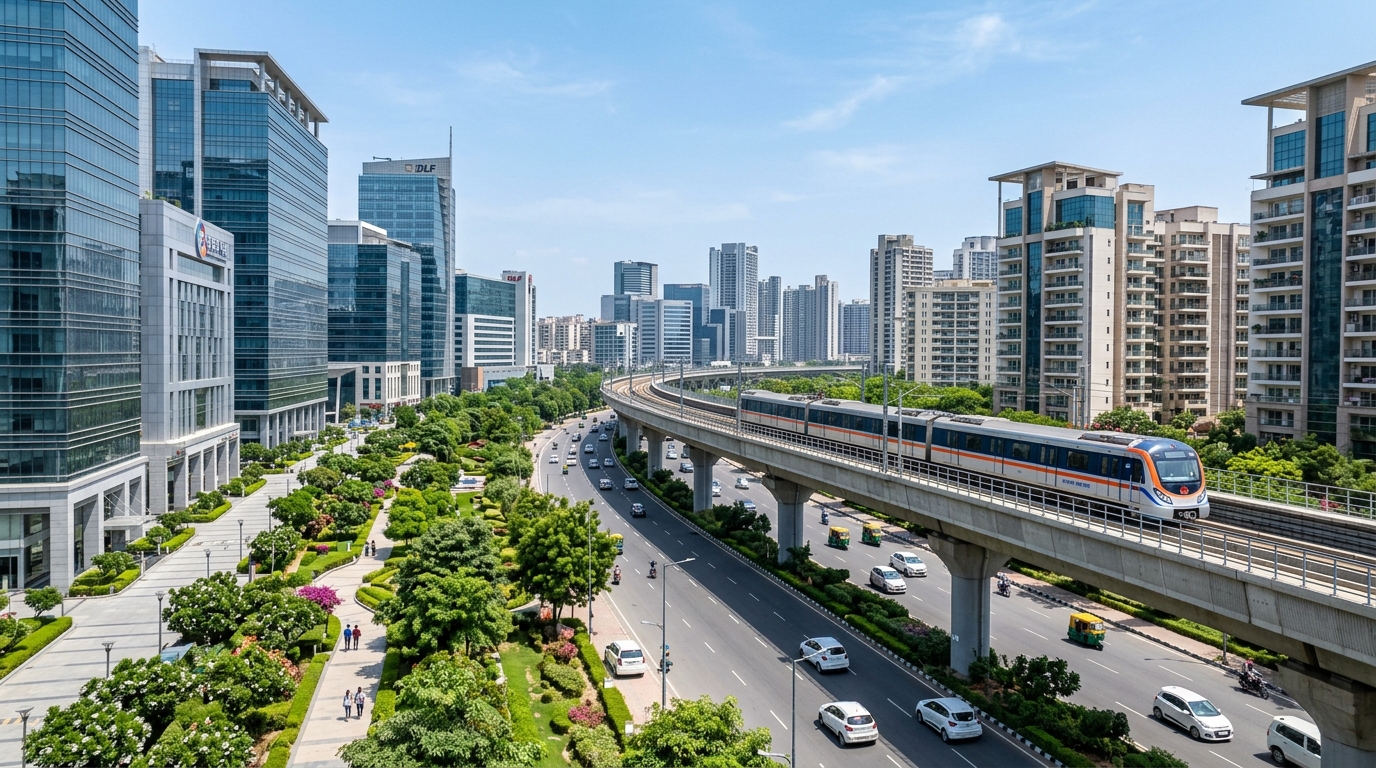
How Should You Think About ROI When Buying Property in Delhi?
There is no single guaranteed ROI for a Delhi locality. A better buyer framework separates capital appreciation from rental yield and from total holding return.
| ROI factor | How to evaluate it | Common mistake |
|---|---|---|
| Capital appreciation | Compare like-for-like historical prices and current transaction evidence. | Using one portal’s headline YoY number as a forecast. |
| Rental yield | Annual realistic rent ÷ total acquisition cost × 100. | Dividing rent by only the negotiated purchase price and ignoring taxes/fees. |
| Vacancy | Estimate realistic occupied months, not theoretical monthly rent. | Assuming full occupancy. |
| Holding cost | Maintenance, property tax, repairs, insurance and financing. | Ignoring recurring costs. |
| Exit liquidity | Look at buyer depth, property type, ticket size and documentation quality. | Assuming every property in a well-known locality is equally liquid. |
For example, a property with a lower entry price can still produce a weaker investment outcome if it has high vacancy, expensive repairs, poor documentation or a thin resale market. Conversely, a premium property may have lower rental yield but stronger end-user demand. The decision should therefore be based on the buyer’s objective rather than a single locality score.
Which Delhi Locality Fits Which Buyer Profile?
| Buyer objective | Localities to compare | Primary comparison metric |
|---|---|---|
| Premium end-use | South Delhi, Vasant Kunj | Property quality, land share, neighbourhood and legal structure |
| Planned apartment living | Dwarka | Society quality, maintenance, sector and connectivity |
| Mid-segment end-use | Rohini, Pitampura, Mayur Vihar | Price-to-space, commute and property age |
| Established West Delhi living | Janakpuri, Punjabi Bagh | Plot/title structure, redevelopment potential and local amenities |
| Rental-oriented purchase | Compare Dwarka, Rohini, South Delhi and Mayur Vihar property-by-property | Rent-to-total-cost ratio and vacancy |
What Are the Legal Checks Before Buying Property in Delhi?
Do not choose a locality first and verify the property later. Verify the property while you compare the locality.
- Check registration history: Delhi’s Revenue Department says past registration details can be searched online through its official systems and DORIS. Delhi Revenue Department property-registration guidance.
- Verify the title chain: Check the seller’s ownership, previous registered instruments and encumbrance position.
- Check sanctioned construction: Compare the physical property with sanctioned plans and applicable building permissions.
- Verify property tax and dues: Review the latest municipal/property-tax position and utility liabilities where relevant.
- Confirm freehold/leasehold status: Do not assume a locality-wide status; verify the individual property documents.
- Check project registration where applicable: For qualifying new real-estate projects, verify the relevant Delhi RERA record.
- Review transaction costs: Delhi’s Revenue Department states that stamp duty for a sale or conveyance deed is 6% for a male buyer and 4% for a female buyer, calculated on consideration or the applicable circle-rate value, whichever is higher. Registration fee is 1% of consideration or circle-rate value, whichever is higher, plus ₹100 pasting fee. Official Delhi registration guidance.
How Do Circle Rates Affect Your Delhi Property Budget?
Circle rates are the government’s minimum valuation benchmarks used for registration calculations. They are not automatically the market selling price. Delhi’s Revenue Department publishes category-wise information and registration guidance, while Credestate maintains a separate Delhi circle-rate guide to help buyers connect the government benchmark with an actual purchase budget. Delhi Revenue e-Sub-Registrar resources.
The practical calculation is: purchase price + stamp duty + registration + brokerage/legal cost where applicable + immediate repairs/renovation + financing cost + recurring holding cost. That is the number a buyer should compare across localities.
What Are the Most Common Mistakes Buyers Make When Comparing Delhi Localities?
- Comparing locality averages without matching property type.
- Treating portal asking prices as confirmed transaction values.
- Using one year’s price change as a guaranteed future ROI.
- Ignoring legal and construction differences between nearby colonies.
- Focusing on metro distance without checking walking access and actual commute.
- Comparing only purchase price and ignoring stamp duty, registration, maintenance and financing.
- Choosing a builder floor without checking the underlying land and construction documentation.
Top Localities to Buy Property in Delhi 2026: Final Buyer Checklist
- Define budget including transaction costs, not just the advertised price.
- Choose 3-5 localities based on commute and property objective.
- Compare like-for-like listings in each locality.
- Calculate realistic rental yield if rental income matters.
- Check title, approvals, tax position and construction documents.
- Verify the latest government registration and circle-rate requirements.
- Negotiate only after comparing the property’s condition and documentation with genuine alternatives.
Frequently Asked Questions About the Top Localities to Buy Property in Delhi
What are the top localities to buy property in Delhi in 2026?
The answer depends on buyer objective. South Delhi and Vasant Kunj are established premium markets; Dwarka offers planned-sector apartment stock; Rohini, Pitampura and Mayur Vihar provide different mid-segment options; Janakpuri and Punjabi Bagh are established West Delhi markets. Current listing data should be compared at the micro-market level rather than using one universal ranking.
Which Delhi locality has the highest property prices?
Premium South Delhi micro-markets can command some of Delhi’s highest residential asking prices, but the exact figure depends on locality, property type and unit. Current listing data shows substantial variation even within South Delhi, so locality averages should not be treated as a universal ceiling.
Is Dwarka a good area for property buyers in 2026?
Dwarka remains a major planned residential market with multiple established sectors, group housing and strong metro connectivity. Whether a particular property makes sense depends on sector, society quality, price, maintenance, documentation and the buyer’s intended holding period.
Is Rohini worth considering for property in 2026?
Rohini has a broad spread of price points across sectors. Current listing data shows materially different prices between sectors such as 9, 13, 14 and 24, which means the specific sector and property matter more than a single Rohini average.
How do I calculate rental ROI on a Delhi property?
Use annual realistic rent divided by total acquisition cost, then multiply by 100. Total acquisition cost should include purchase price, stamp duty, registration, brokerage/legal charges where applicable, immediate renovation and any financing or setup costs you want included in the investment calculation.
Can circle rate be used as the market price?
No. Circle rate is a government valuation benchmark used for registration calculations. Market price is the amount a buyer and seller actually negotiate. The two can differ materially.
What should I verify before buying a builder floor in Delhi?
Verify the registered title chain, land share, sanctioned building plan, floor rights, parking arrangement, construction compliance, utility position, tax dues, seller identity and any applicable conversion or lease/freehold documentation.

Why Use Credestate for Delhi Property Search?
Credestate focuses on Delhi property search and buyer-oriented research across residential and investment markets. We combine locality-level market information with practical property due diligence, including price comparisons, document checks, registration context and buyer decision support.
Explore verified Delhi property listings or contact Credestate for property-specific requirements. For deeper buyer planning, also see the Home Loan in Delhi 2026 guide, Property Registration in Delhi 2026 guide and DDA Flats in Delhi 2026 guide.
Research sources: Housing.com South Delhi price trends; Housing.com Dwarka price trends; Housing.com Rohini price trends; Housing.com Vasant Kunj price trends; Housing.com Janakpuri price trends; Housing.com Punjabi Bagh price trends; Housing.com Pitampura price trends; Housing.com Mayur Vihar Phase 1 price trends; and Delhi Revenue Department registration guidance.
Disclaimer: Property prices, market conditions, portal averages, transaction costs, government rules and infrastructure timelines can change. Listing-portal prices are indicative and may not represent registered transaction values. Verify the current property documents, government charges and property-specific approvals before purchasing.


Join The Discussion