
Last updated: September 25, 2026
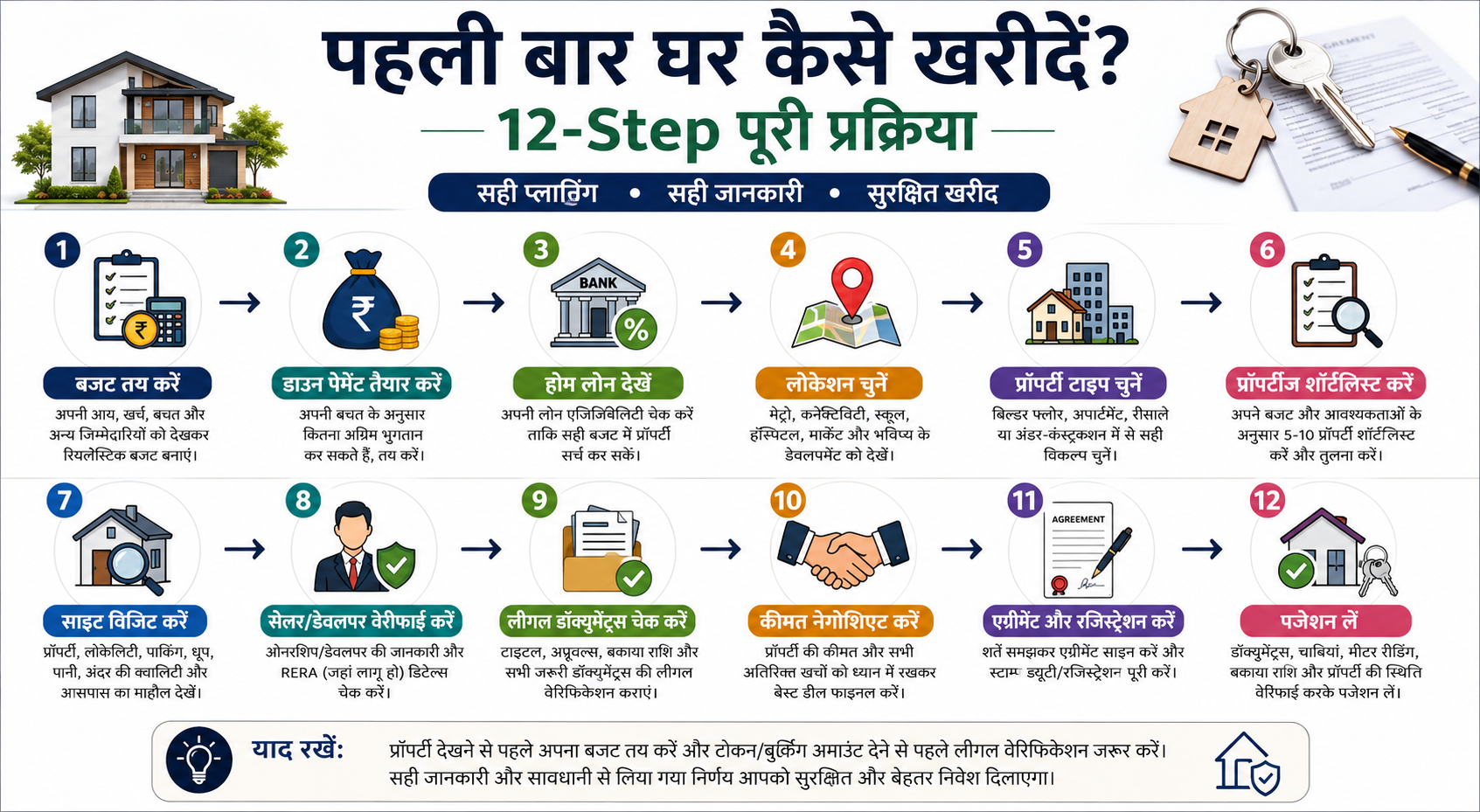
What should you check before buying property in Delhi? The safest answer is not “check the Sale Deed and negotiate the price.” A Delhi property purchase should pass a sequence of financial, location, physical, document and transaction checks before you commit meaningful money.
Credestate’s Delhi property buying checklist is designed as a decision framework rather than another document list. It helps you answer a more important question:
“Should I move this property to the next stage—or should I walk away?”
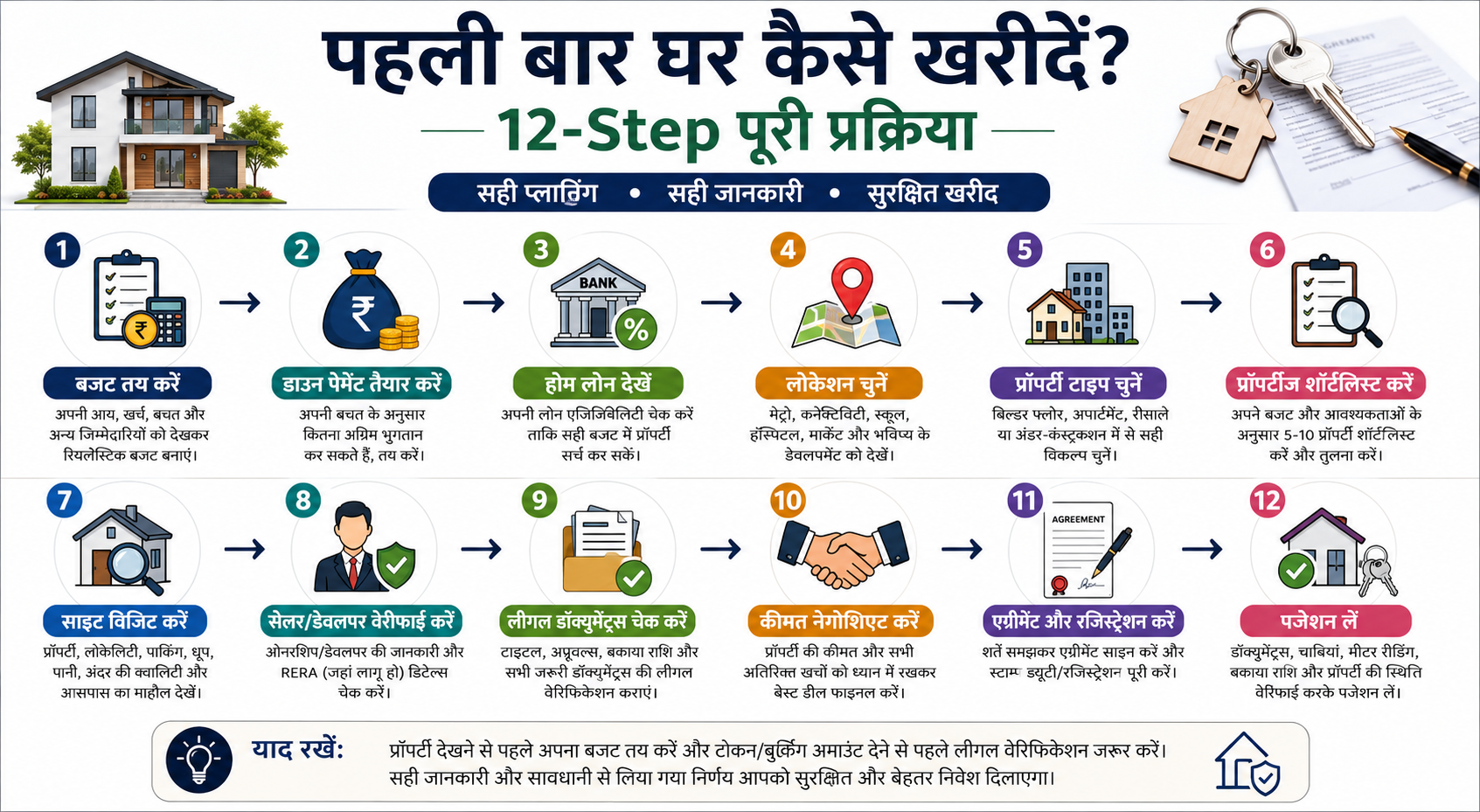
What Makes This Delhi Property Buying Checklist Different?
Most property buying guides are either search guides (“how to find a flat”) or legal checklists (“which documents should I inspect”). You need both—but there is another layer that is often missing: a repeatable method for comparing properties before you pay token money.
Our framework uses five gates:
| Gate | Question | Do not advance if… |
|---|---|---|
| 1. Money | Can I comfortably afford the total acquisition cost? | The budget works only if everything goes perfectly. |
| 2. Location | Does this micro-market work for my actual daily life? | The commute or neighbourhood is unacceptable. |
| 3. Property | Does the physical asset match the listing and my requirements? | Major condition or access issues appear. |
| 4. Documents | Can the seller establish the rights being sold? | Title, authority, dues or approvals remain unclear. |
| 5. Deal | Does the negotiated price and transaction structure make sense? | The price ignores defects, risks or total buying costs. |
A property that fails one of these gates should not be “rescued” simply because you like the house.
Step 1: Define Your Real Buying Budget, Not Your Maximum Loan
The first mistake buyers make is starting with the question: “How much home loan can I get?”
The better question is: “What total monthly and upfront cost can I comfortably carry?”
Your working budget should consider:
- Down payment
- Home-loan EMI
- Stamp duty and registration
- Legal and due-diligence costs
- Brokerage, where applicable
- Renovation and repairs
- Moving and initial setup costs
- Maintenance and society charges
- An emergency cash reserve after purchase
In Delhi, the Department of Revenue currently states that sale deeds attract stamp/transfer duty of 4% for a woman buyer and 6% for a man buyer, while registration fee is currently listed as 1% of the total value of the Sale Deed plus ₹100 pasting charge. The same government source should be checked again before registration because applicable rules and transaction circumstances can change. citeturn279606search0turn279606search1

How Do You Calculate the True Cost of Buying a Property in Delhi?
Use this simple working formula:
True acquisition cost = property price + government charges + transaction costs + immediate repair/setup costs
For example, a buyer considering a ₹1.20 crore property should not mentally record the decision as simply “₹1.20 crore.” The cash requirement and long-term ownership cost can be materially higher once government charges, financing-related expenses, repairs and setup are included.
This is one of the most important differences between a listing price and a buying budget.
Step 2: Choose the Micro-Location Before Falling in Love With the Property
Delhi is too geographically diverse for a city-level “good area/bad area” shortcut.
Compare the micro-location, not just the locality name.
Run the 30-Minute Reality Test
For every serious property, test your actual weekday route during a realistic travel period.
Measure:
- Home-to-work or home-to-business travel time
- Nearest metro access
- Last-mile connectivity
- School and childcare access, if relevant
- Hospital/clinic access
- Daily market and grocery access
- Parking and road access
- Noise, congestion and street activity
A property that looks attractive during a Sunday site visit can feel completely different during a weekday commute.
Run the Day-Night Test
Visit at least once during daylight and, where practical, again after dark. You are not merely inspecting the property—you are inspecting the environment around the property.
Look for:
- Street lighting
- Traffic and parking pressure
- Noise
- Waterlogging or drainage indicators
- Commercial activity
- Construction activity nearby
- Approach-road condition
Step 3: Compare Properties Using One Scorecard
Do not compare properties by scrolling through listings and relying on memory. Use the same scorecard for every serious option.
| Factor | What to record |
|---|---|
| Purchase price | Quoted and negotiated price |
| True acquisition cost | Price + government + transaction + immediate repair costs |
| Usable space | Actual usable area, not only marketing language |
| Location | Micro-market and exact access |
| Commute | Real travel time |
| Property condition | Repairs, age, waterproofing, electrical/plumbing condition |
| Parking | Type, location and documentation where relevant |
| Documentation | Title, authority, dues, approvals and transaction history |
| Liquidity | Comparable properties and likely buyer demand |
| Negotiation | Evidence supporting your offer |
Credestate rule: never let a property win because of one impressive feature while you ignore four weaker categories.
Step 4: Inspect the Property Like a Buyer, Not Like a Visitor
A site visit should be an inspection, not a tour.
Inside the Property
- Walls and ceilings for dampness or seepage
- Bathrooms for leakage and water pressure
- Electrical fittings and visible wiring
- Doors and windows
- Floor condition
- Natural light and ventilation
- Kitchen plumbing
- Signs of recent cosmetic covering of defects
Outside the Property
- Building entrance and common areas
- Lift condition
- Staircase condition
- Parking arrangement
- Access road
- Neighbouring construction
- Water supply arrangements
- Waste disposal and maintenance
Ask One Question Many Buyers Forget
“What will I have to spend in the first 12 months after possession?”
That question forces a seller, agent or buyer to think beyond the sale price and exposes costs that are easy to ignore during a viewing.
Step 5: Build the Property’s Ownership Story Before Paying Token Money
A document is useful only when you understand what it establishes and how it connects with the rest of the property history.
For a serious purchase, investigate the applicable:
- Sale Deed or Conveyance Deed
- Previous title/ownership documents
- Seller identity and authority
- Registration records
- Mortgage and encumbrance position
- Property tax and relevant dues
- Sanctioned plans and applicable approvals
- Mutation or relevant property records
- RERA information where applicable
- Society/RWA records where applicable
Credestate’s separate Delhi property document checklist goes deeper into the individual documents and verification questions.
What Can Delhi Buyers Verify Independently?
The Delhi Revenue Department states that past property-registration details can be searched online without a search fee and also provides information around property registration and non-encumbrance checks. That gives buyers a useful independent verification path instead of relying only on documents supplied by a seller or intermediary. citeturn279606search1
Practical rule: whenever a seller makes an important claim, ask whether the claim can be supported by an official record, registered document or other reliable evidence.
Step 6: Treat DDA and Leasehold Properties as a Separate Due-Diligence Track
DDA-related transactions can have a different document trail from ordinary resale apartments and builder floors.
DDA currently provides online housing/property services relating to registration/allotment, freehold status, mutation and other requests. Its current material also confirms that leasehold-to-freehold conversion is handled through DDA processes, with applicable dues and documentation requirements. citeturn637982search2turn637982search7turn637982search8
DDA’s website contains general pages describing leasehold-to-freehold services, while its 2026 archive also includes a notice stating that the leasehold-to-freehold conversion process had been put on hold till further orders. Because these sources are not sufficient to establish the status of every individual property, a buyer should verify the current position with DDA for the specific property and application history rather than relying on an old broker statement that “conversion is immediate.”
For DDA properties, investigate:
- Original allotment
- Possession documentation
- Current tenure/status
- Conveyance or relevant transfer documents
- Mutation/substitution history
- Outstanding DDA dues
- Mortgage/lender status
- Any claimed freehold conversion
Step 7: Use a “Token Money Gate” Before You Commit
Before paying token money or a booking amount, answer these seven questions in writing:
- Who is legally selling the property?
- What exact property rights are being sold?
- Have the critical title documents been reviewed?
- Are important dues or lender claims unresolved?
- Does the physical property match the documents and listing?
- Is the token/refund/forfeiture condition clearly written?
- Do I understand my total acquisition cost?
If even one high-impact answer is “unclear,” the correct next step is usually more verification—not a bigger token payment.
What Should Be Written Into a Token or Booking Arrangement?
Before signing or paying, the transaction documents should clearly describe the parties, property, amount, payment schedule and other material terms. Depending on the transaction, buyers may also need written treatment of:
- Refund/forfeiture conditions
- Document verification conditions
- Outstanding dues and their responsibility
- Possession timeline
- Registration responsibility
- Items included with the property
- Any representations the seller is making
Do not assume that an informal WhatsApp promise will provide the same protection as a properly drafted transaction document.
Step 8: Negotiate From Evidence, Not Emotion
Negotiation is stronger when your offer is connected to observable facts.
Instead of:
“Can you reduce ₹10 lakh?”
build the offer from:
- Comparable local asking/transaction evidence, where available
- Immediate repair requirements
- Parking or access limitations
- Property age
- Documentation gaps
- Outstanding dues
- Required furnishing or renovation
- Time-to-possession or seller urgency, if legitimately known
Negotiation principle: every reduction request should have a reason the seller can evaluate.
Step 9: Separate “Price Risk” From “Legal Risk”
This is one of the most useful ways to think about a Delhi property purchase.
| Risk | Example | Response |
|---|---|---|
| Price risk | Property may be overpriced relative to nearby comparable options | Research comparable properties and negotiate |
| Physical risk | Major seepage, structural concerns or expensive repairs | Inspect, estimate repair cost and renegotiate |
| Document risk | Ownership chain or seller authority unclear | Pause and obtain proper verification |
| Transaction risk | Token/refund terms unclear | Clarify in writing before payment |
| Location risk | Commute or neighbourhood fails your actual needs | Re-test the location before commitment |
A cheap property with unresolved legal risk is not automatically a bargain.
Step 10: Apply the “No-Regret” Test
Before committing, ask yourself five final questions:
- Would I still buy this property if I had to live with the current location for the next five years?
- Can I afford it without exhausting my emergency reserve?
- Have I compared it with at least two realistic alternatives?
- Can I explain the property’s ownership and document trail clearly?
- If the seller refuses my evidence-based negotiation points, would I still consider the property at the revised price?
If the answer to several of these questions is no, the problem may not be the property—it may be that you are trying to force a purchase decision too early.
Delhi Property Buying Checklist: One-Page Decision Sheet
| Checkpoint | Pass? | Evidence |
|---|---|---|
| Budget is comfortable | ☐ | Income/EMI/cash-flow plan |
| Total acquisition cost calculated | ☐ | Price + charges + repairs |
| Micro-location tested | ☐ | Commute + day/night visits |
| Property condition inspected | ☐ | Visit notes / estimates |
| Ownership story understood | ☐ | Title/transaction documents |
| Outstanding dues checked | ☐ | Relevant records / no-dues evidence |
| Applicable approvals checked | ☐ | Property-specific documents |
| Token terms understood | ☐ | Written terms |
| Comparable properties reviewed | ☐ | Shortlist / comparison sheet |
| Final legal due diligence completed | ☐ | Qualified professional review where required |
How Can You Find Properties for Sale and Rent in Delhi?
Once a property passes your budget, location, physical, document and transaction gates, the next step is to compare real inventory.
Browse Credestate properties for sale and rent in Delhi by property type, locality and budget.
For buyers or sellers who need assistance with a property enquiry, visit the Credestate contact page.
Credestate’s office is located at Ground Floor, Creative Heights, Rohini Sector 29, Delhi – 110039, India.
Frequently Asked Questions About Buying Property in Delhi
What is the most important thing to check before buying property in Delhi?
Do not focus on one document or one price. The most important overall check is whether the property passes budget, location, physical condition, ownership/document and transaction gates before you commit significant money.
How much should I budget beyond the property price in Delhi?
Budget for applicable stamp duty, registration, legal and due-diligence costs, financing-related costs, brokerage where applicable, repairs, moving expenses and an emergency reserve. Delhi’s current government registration guidance lists 4% stamp/transfer duty for a woman buyer and 6% for a man buyer on sale deeds, plus 1% registration fee and ₹100 pasting charge. citeturn279606search0turn279606search1
Should I pay token money before checking property documents?
For a serious purchase, critical ownership, seller-authority, dues and transaction-term checks should be addressed before a substantial or difficult-to-refund payment. If a major issue is still unclear, pause the payment and verify it first.
How many properties should I compare before buying in Delhi?
There is no fixed number, but comparing at least a few genuinely comparable properties helps you understand whether your preferred property is reasonably priced and whether you are choosing the property—or simply reacting to the first one you liked.
Should I buy a DDA property without checking its current tenure status?
No. DDA properties can have specific allotment, mutation, conveyance and tenure histories. DDA provides current online resources for housing, freehold status and mutation, and buyers should verify the actual status of the individual property rather than relying on an old listing description. citeturn637982search2turn637982search7
What is the difference between a property buying checklist and a property document checklist?
A document checklist focuses on legal and administrative records. A full property buying checklist also covers budget, total acquisition cost, location, physical condition, comparison, negotiation and transaction terms. You need both layers before making a purchase.
Final Takeaway: Do Not Buy the Property Until It Passes the Gates
Buying property in Delhi becomes easier when you stop treating it as a single decision.
It is a sequence:
Budget → Micro-location → Property → Documents → Comparison → Negotiation → Token → Registration → Possession
The key is not to move to the next step simply because you are emotionally attached to the property.
Pass the gate. Then move forward.
That is the purpose of this Delhi property buying checklist.
For more detailed legal-document checks, read Credestate’s Documents to Check Before Buying Property in Delhi. For market context, also read our Property Rates in Delhi 2026 guide.
Disclaimer: This article is general educational information and is not legal, tax, financial or valuation advice. Property transactions should be evaluated according to the specific property, documents, transaction structure and applicable law. Verify current government charges and requirements with the relevant Delhi authority before registration and consider qualified professional due diligence for significant transactions.



Join The Discussion